
What is Bird Electric Scooter?
Bird is a dockless electric scooter sharing company based in Santa Monica, California. The company founded by Travis VanderZanden, formerly an executive at Lyft and Uber in September 2017. The bird electric scooter operates in over 60 cities throughout Europe, the Middle East, and North America. The main aim of the company is to make cities more comfortable by reducing car usage, traffic, and carbon emissions.Bird Electric Scooter New Funding
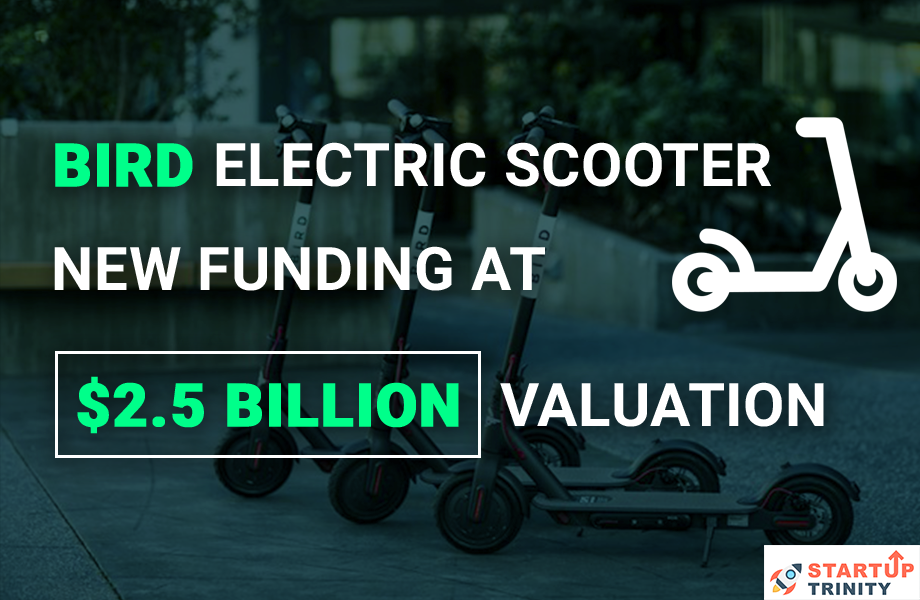
Bird electric scooters are being valued at $2.5 billion in a new funding round managed by the venture capital firm Sequoia Capital. The company developed quickly as it delivered squadrons of scooters to cities around the country. Competitors also proliferated, including Lime, Skip, Lyft, and Spin, which is owned by Ford, and Jump, which is owned by Uber. The funding makes the Bird valuation slightly above the $2.3 billion that it was pegged at last year. The $2.3 billion figure represented double the startup’s previous valuation, as venture capital investors fought to pour money into scooter startups. The information on the Bird new round that it was looking to raises $200 million to $300 million, and the post-money valuation of more than $2.3 billion. In June, Bird raises $300 million in series C round by Sequoia Capital with Roelof Botha and joining Bird board at that time. Sequoia Capital declined to comment on this round, but Botha comments and says Bird team “exemplifies grit.” Innovation in a bird is a spectrum of systems to obtain operational perfection at the scale, including hardware design and manufacturing, vehicle maintenance and repair, optimization of Bird charging and deployment, and city-level regulatory affairs is unique. The CEO of Bird Travis VanderZanden said it has positive unit economics on its new Bird Zero scooters, which accounts for more than 75% of its fleet. In last month, Bird acquired Scoot in a deal worth less than $25 million. The Bird’s first expansion into traditional bicycles and mopeds. Before that, Bird unveiled a two-seater hybrid bile/moped vehicle called the Bird Cruiser. In enhancement to offering shared vehicles, Bird is also selling scooters directly to consumers. Bird’s chief executive, Travis VanderZanden, recently said in a tweet that the company made $1.27 on every ride, including all costs. He said revenue had increased since last year. Bird has worked to decrease its costs by fashioning staff and slowing down its expansion plans. It has also experimented with firsthand sales of its scooters and monthly rentals. The Bird new fundraising has not been finally decided, said the people, who spoke on the condition of anonymity because they were not authorized to speak publicly. Last year, Bird raise a total of $418 million in funding. Before this round, Bird had already raised more than $400 million in funding and reached a valuation of $2 billion last June.Frequently Asked Questions
Bird is now valued at $2.5 billion following its recent funding announcement.
The exact amount hasn’t been disclosed publicly, but it significantly boosts Bird’s growth and expansion plans.
Bird plans to expand into new cities, improve battery technology, and enhance rider safety features.
The funding round included venture capital firms and strategic investors with an interest in micromobility.
Bird’s global market presence, growing user base, and focus on eco-friendly transportation contribute to its high valuation.
At $2.5 billion, Bird is among the highest-valued micromobility companies, competing with Lime, Spin, and Tier.
Yes, Bird aims to increase its presence in Europe, Asia, and other emerging micromobility markets.
Bird earns revenue through per-minute ride charges, subscription passes, and fleet partnerships.
Yes, they are zero-emission vehicles designed to promote sustainable urban transportation.
Bird has explored public listing and private investment opportunities; investors should follow official announcements.